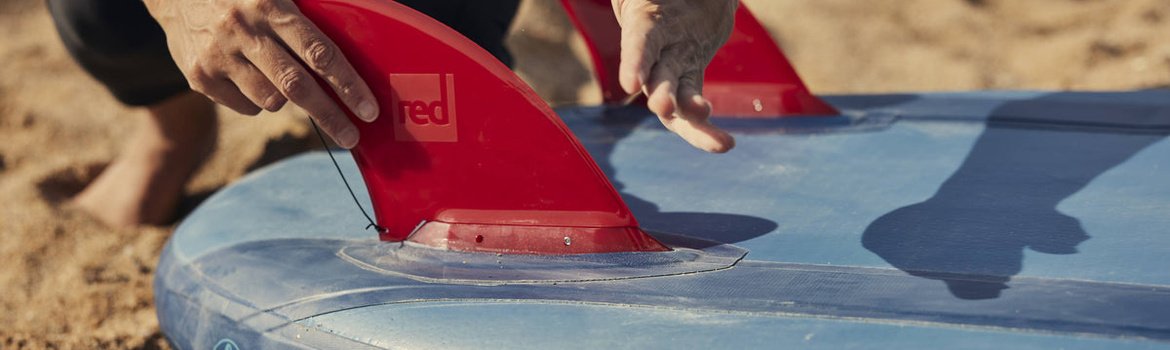
When choosing a SUP board, most attention goes to its length, width and construction, while the fin often takes a back seat. Yet this small detail decides whether the board holds its line, how easily you can turn it, and whether you snag the bottom on a shallow stretch of river. Paddling a calm lake, heading off on a long trip or racing? Every situation calls for a different fin. Today we explain what to look for so the fin works for you, not against you.
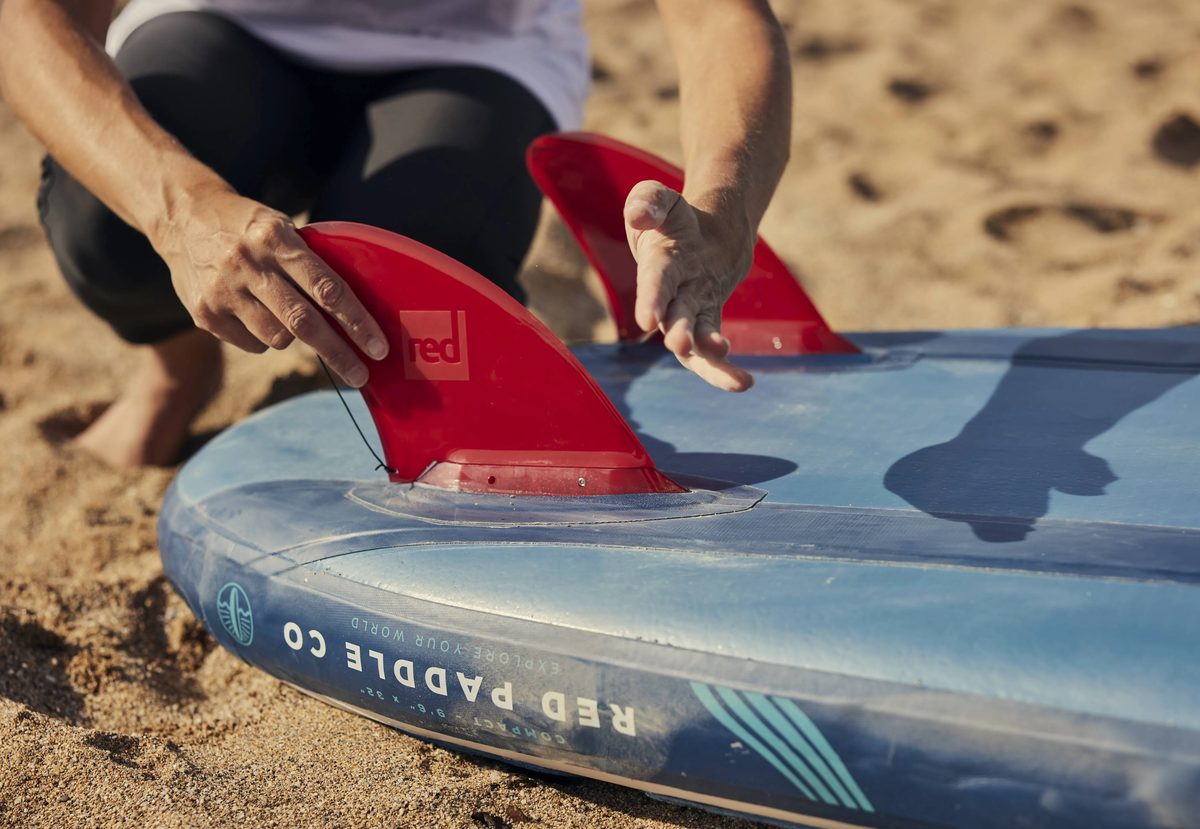
Photo: Red Paddle Co
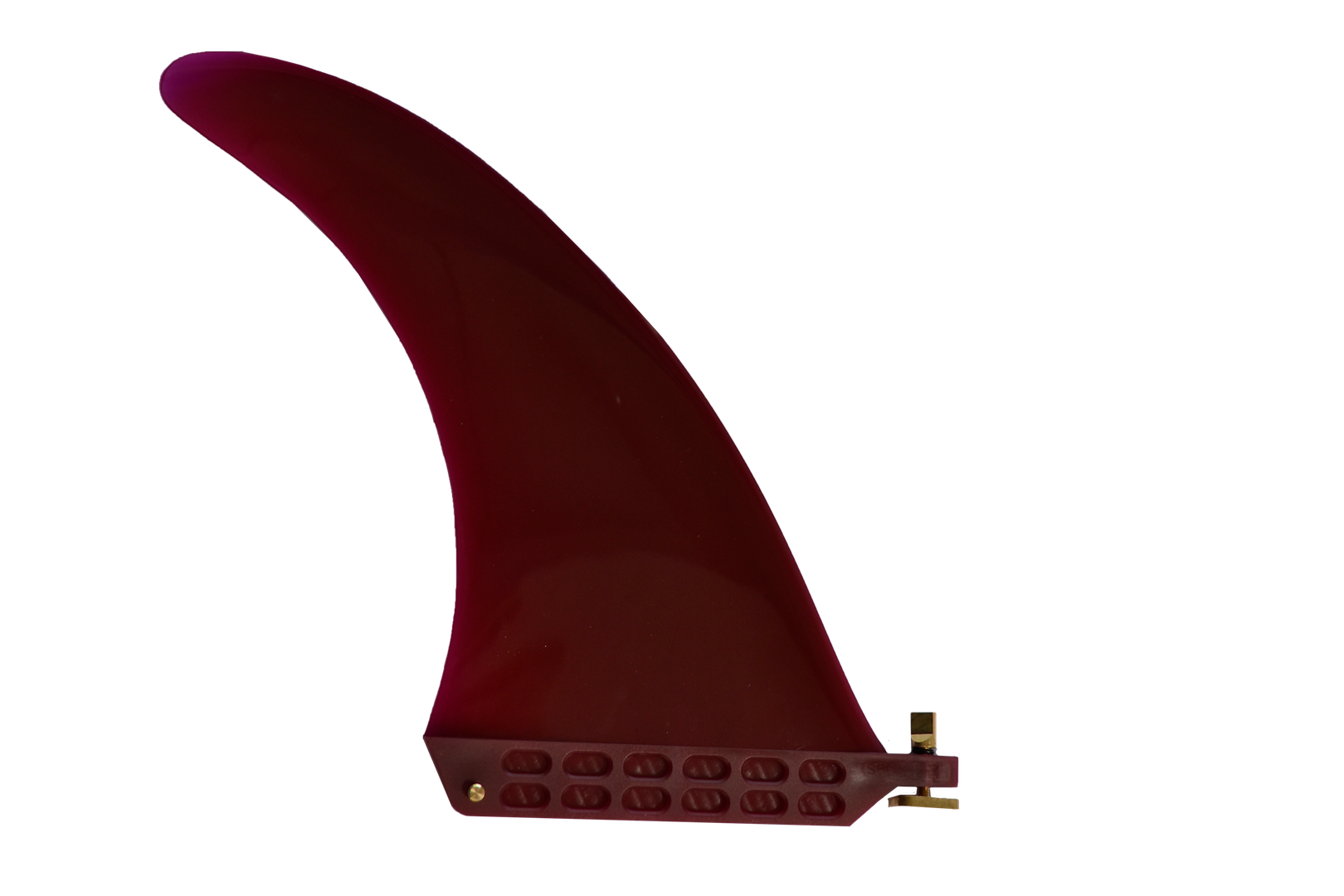
Most all-round boards have one removable centre fin at the tail, and many inflatable boards also have two small side fins. The centre fin suits flat water and everyday paddling, as it helps the board travel straight after every stroke. For example, the Gladiator Origin 8" universal fin.
Some boards have three fins: a larger one in the middle and two smaller ones on the sides. This setup gives more grip and helps in waves, but the fin layout is always determined by the design of the specific board.
Touring boards usually get a larger fin, because on a long trip the most important thing is that the board holds its line well and you don't have to keep correcting your course. A good example is the Gladiator Pro 9" touring fin.


Race boards need a fin that helps them move fast and straight. Professionals often choose lightweight carbon fibre models such as the Starboard Purify 290. A durable alternative is the Starboard Race 23 Net Positive, made from upcycled fishing nets. For surf SUPs manoeuvrability matters most, so smaller fins are usually the best fit.
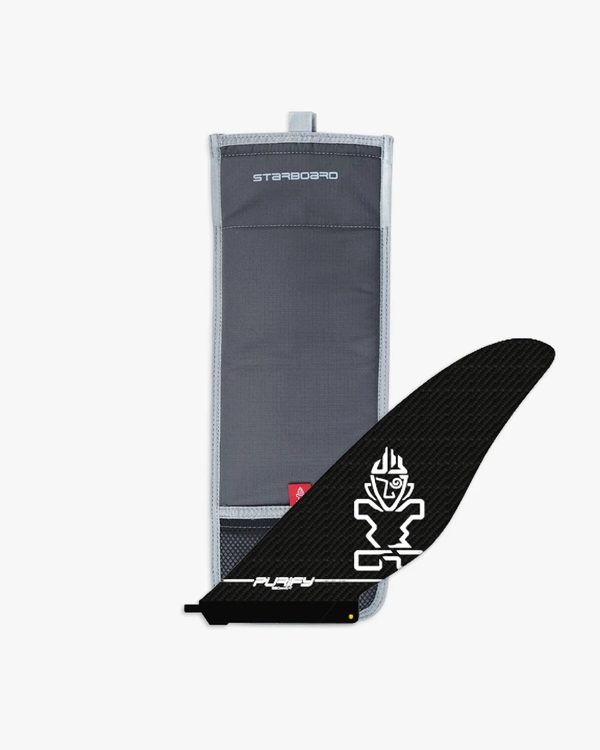
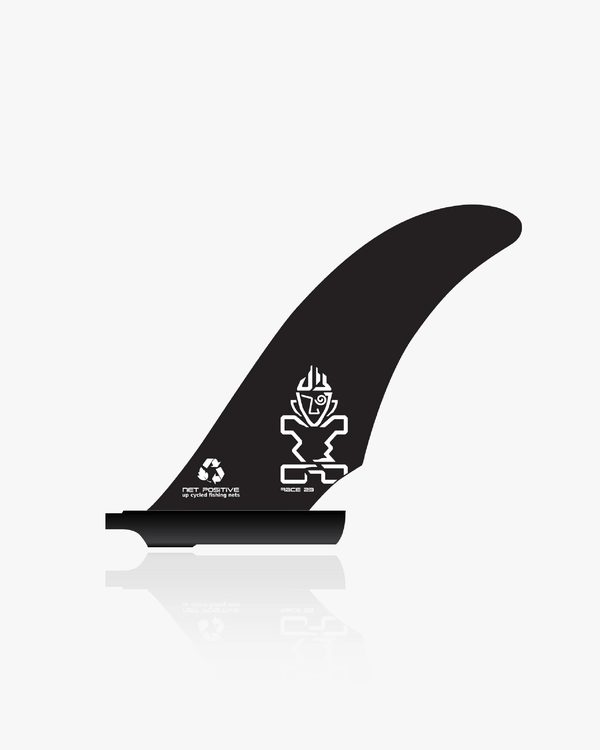
Photo: Starboard
The shape and size of the fin should match the conditions you paddle in:

If you often paddle in different conditions, a universal medium-sized fin is the most practical choice.
A larger, deeper fin holds a line better, but the board becomes less manoeuvrable and the fin catches more easily on the bottom or weed. A smaller fin lets you turn more freely and paddle in shallower water, but the board drifts to the side more after each stroke, so you have to switch paddling sides more often.
Shape matters too. Longer, narrower fins are usually chosen for straight, steady paddling, while shorter or wider ones are better for manoeuvring. Still, shape isn't the only factor. The board's length, width, bottom shape and the manufacturer's fin system all play a part.
The position of the fin in the box matters as well. In most fin boxes the fin can be slid back and forth: further forward the board turns more easily, further back it holds a straighter line. The middle position usually suits beginners best.
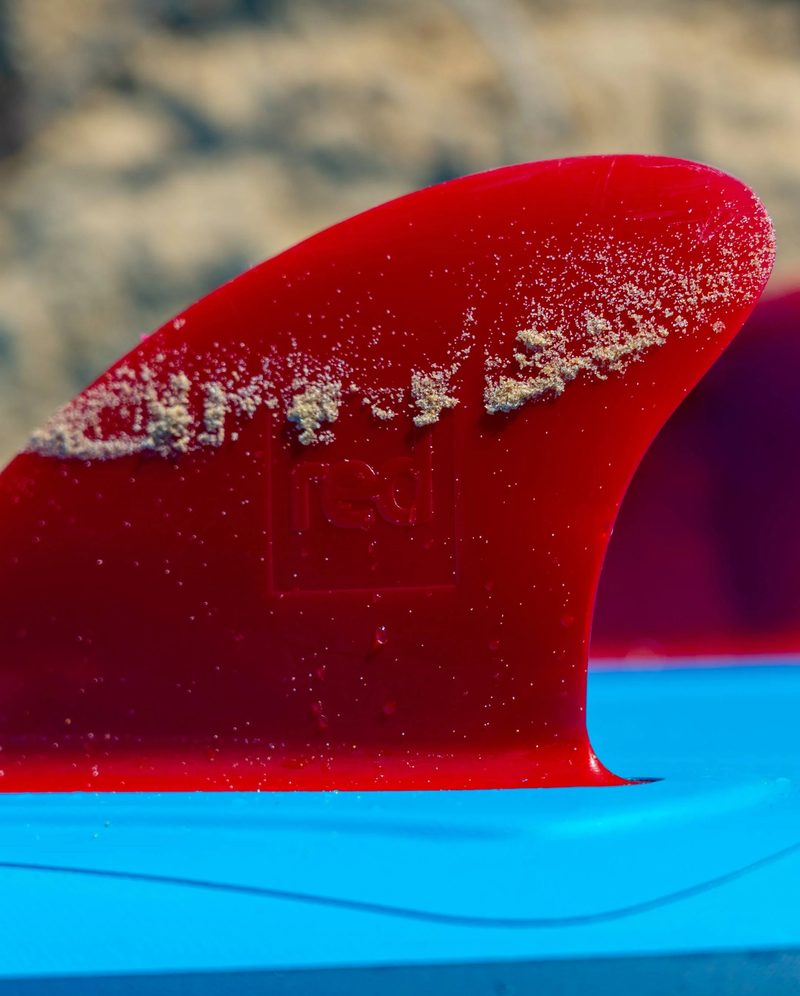
Photo: Red Paddle Co
Before buying, always check that the fin fits your board's fin box. SUP boards use different fin systems, so a fin made for one type may not fit another, even if it looks similar in size. The most common system is the US Fin Box, and most of the fins we offer are compatible with it.
Also make sure the fin locks firmly in place and doesn't move in the box. If you have a removable fin, check whether the set includes the pin, screw or other fixing it needs. Some fins are sold without a fin bolt, so you need to buy one separately: fin bolt with nut. It's worth having a spare too, as fin bolts have a habit of getting lost right by the water.
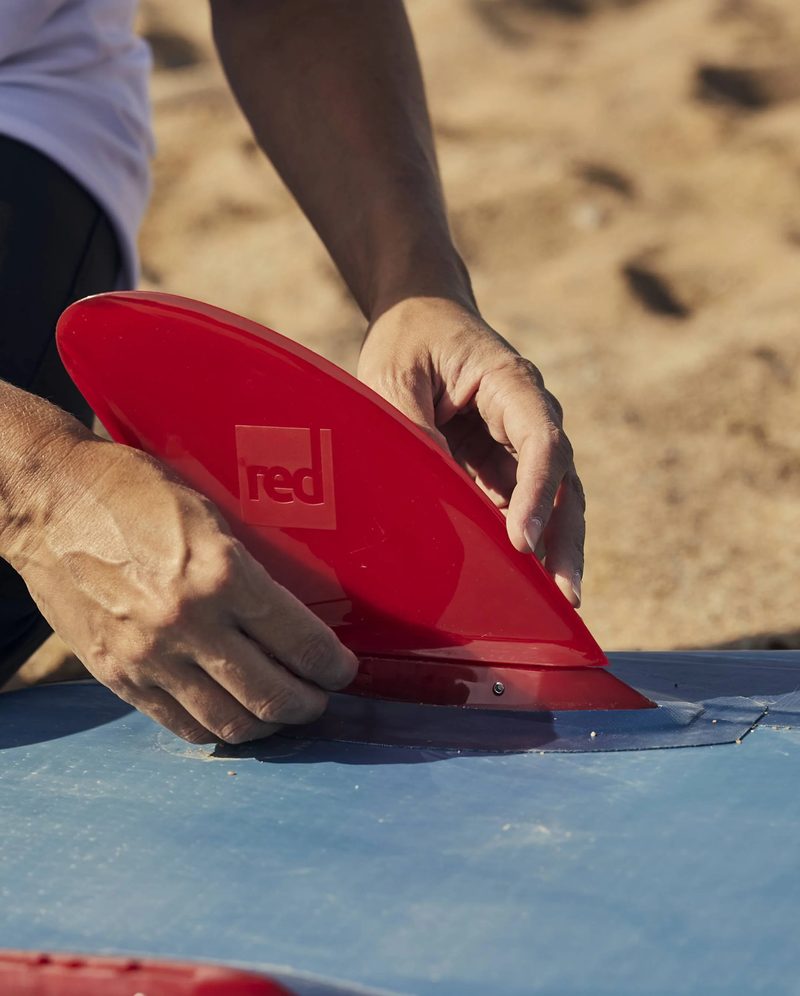
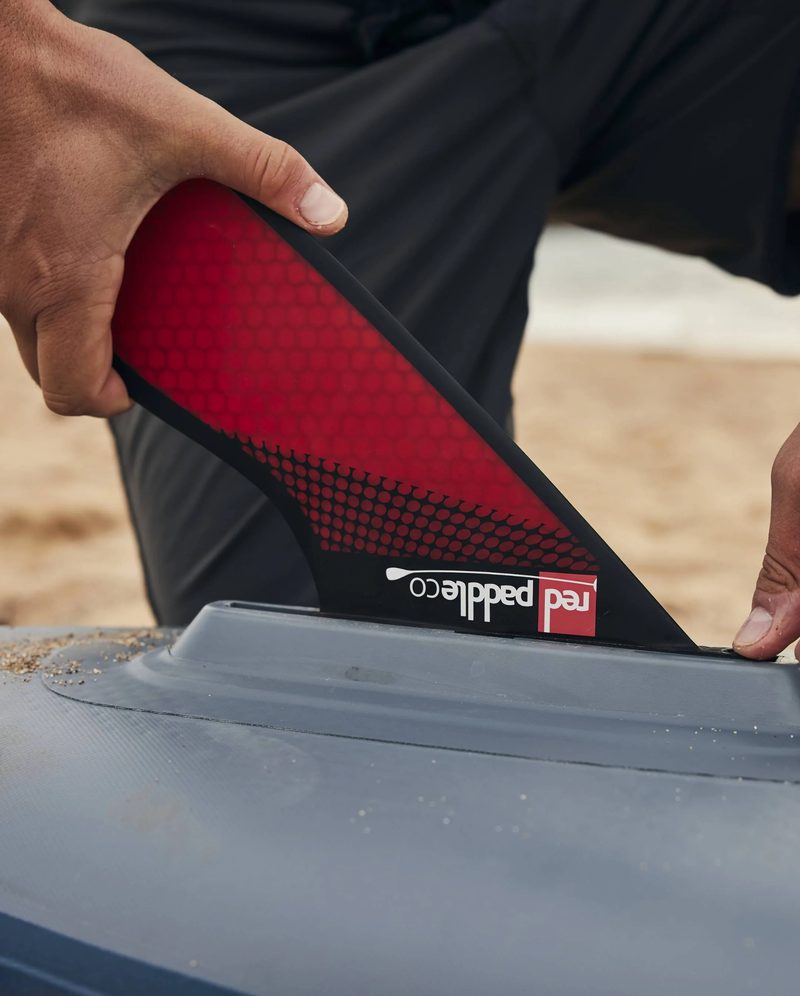
Photo: Red Paddle Co
For beginners, the standard fin recommended by the board manufacturer is usually the right choice. It is matched to the board's shape and fin system, so there's no need to worry about compatibility. Once you know which conditions you paddle in most, you can choose a specialised fin.
The key point: first make sure the fin fits your board's fin system. Only then choose it based on where you paddle and the result you want: better tracking, less draft or more manoeuvrability. You'll find all our fins in the Fins category. If you're unsure which one will suit your board, get in touch and we'll help you choose. For more equipment tips, read “How to choose a SUP board?” and “How to choose the right paddle?”.

